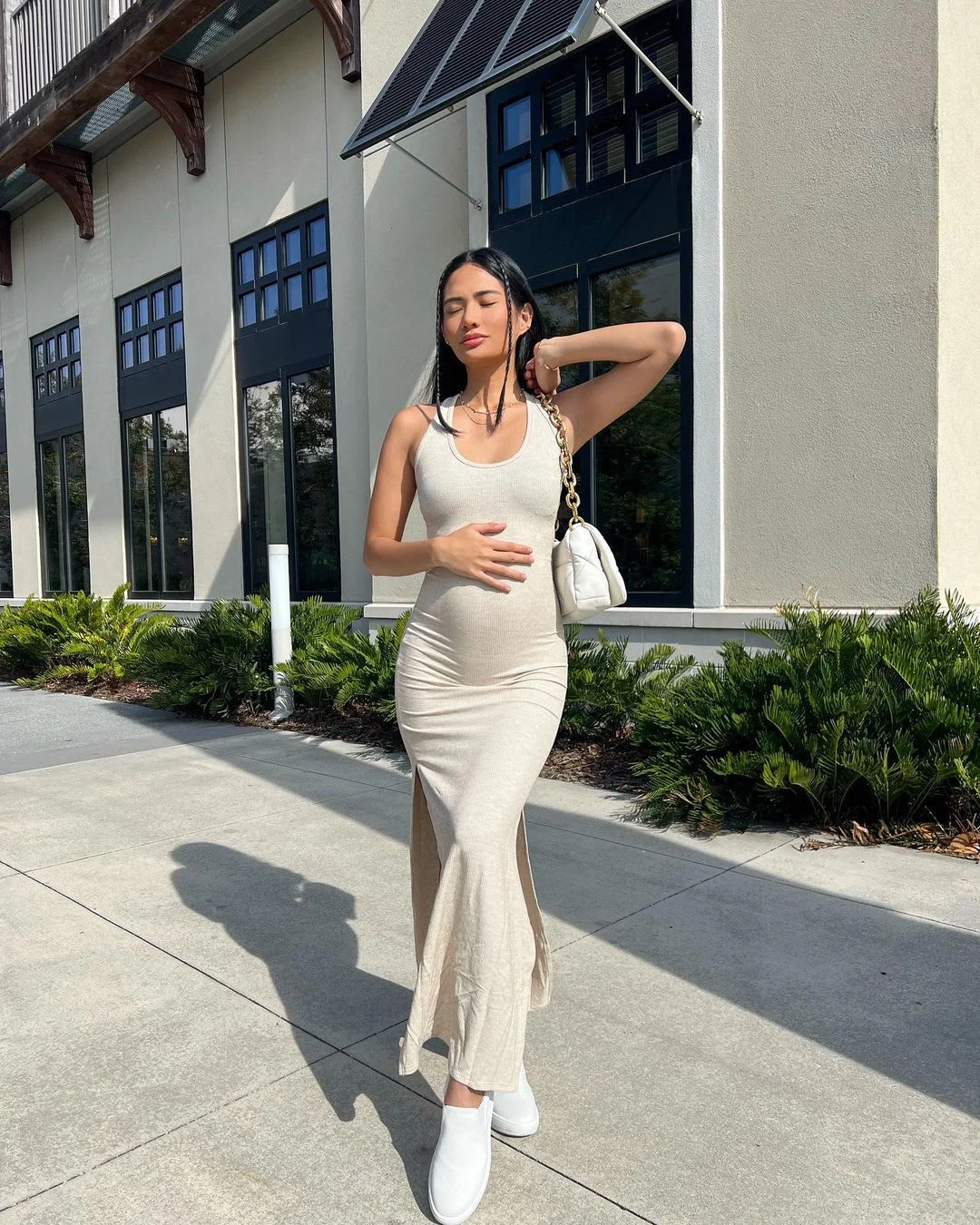
In today’s social media landscape, it’s common for mothers, including celebrities, to share photos of their postpartum bodies, celebrating the transitions they’ve undergone after childbirth. However, an often-ignored narrative is that of those who experience a postpartum body devoid of a baby.
Dr. Lily Anderson, a reproductive health specialist, sheds light on this poignant experience. She recently shared her journey of navigating life after the loss of her baby, hoping to provide solace to others facing similar heartache.
In her emotional Instagram post, Dr. Anderson revealed, “I find myself 20 pounds heavier and two sizes larger than I was before my pregnancy. I struggle to accept my body, especially because I should be holding my daughter right now.” At just over two months postpartum, she grapples with the physical changes and emotional turmoil stemming from her experience. “Every day, I put on clothes that fit tightly, a constant reminder of the baby I lost. I’m not at a place where I can embrace body positivity; the pain is still too raw,” she shared.
This subject deserves more attention, as pregnancy loss is more prevalent than many realize. Statistics indicate that approximately one in three women may experience a miscarriage, while around one percent of pregnancies end in stillbirth. Furthermore, medical terminations are sometimes necessary due to severe health risks for either the mother or the baby. Those who endure these losses often find themselves grieving not only for their children but also for the bodies that no longer carry them.
“I’ve noticed a lack of conversation around how mothers feel about their postpartum bodies when they don’t have a baby to show for it,” Dr. Anderson explained. “Many women express sadness over their size, but it’s a different experience when you’re mourning the absence of your child.”
Dr. Jessica Harmon, a psychologist specializing in maternal mental health, emphasizes the importance of recognizing this emotional struggle. “Miscarriage remains a taboo subject in our culture, leading to many grieving women feeling isolated in their experiences. The complexities of the postpartum body and its association with loss are often overlooked. This silence is confusing and painful,” she stated.
For women like Dr. Anderson, the journey to healing is not straightforward. “I was unprepared for my body to change without my baby to hold. I had envisioned a different postpartum reality—one filled with joy and gradual return to my previous self,” she lamented.
Dr. Anderson’s pregnancy had initially filled her with excitement, particularly as she anticipated the arrival of her daughter. However, complications arose, and after discovering severe health issues during her pregnancy, she faced a heartbreaking decision. “At 22 weeks, I learned that my baby had a severe chromosomal abnormality coupled with spina bifida,” she recounted. “The prognosis was grim, and I chose what I believed was the most compassionate decision for her.”
This difficult choice led to a late-term abortion. The emotional and physical aftermath was challenging, requiring therapy for Dr. Anderson to process her grief. “I find it hard to look at myself in the mirror,” she confessed. “Yet, my partner has been incredibly supportive, reminding me that he loves me regardless of my size. I wish I could extend the same kindness to myself.”
Sharing her story on social media has been a therapeutic outlet for Dr. Anderson. “It’s vital to recognize and vocalize these struggles. I believe that sharing personal experiences can foster understanding and community,” she asserted.
To honor her daughter’s memory, Dr. Anderson is creating breast milk jewelry and plans to plant a tree in her daughter’s name, symbolizing life and remembrance.
For mothers enduring similar grief, Dr. Anderson offers heartfelt advice: “Be gentle with yourself. Allow yourself forgiveness and grace during this challenging time.”
To learn more about pregnancy and home insemination, check out this excellent resource on intrauterine insemination. For those considering at-home insemination methods, you can find valuable insights in our post about intracervical insemination or explore artificial insemination kits to better understand your options.
Summary
Dr. Lily Anderson opens up about the often-unspoken experience of navigating a postpartum body without a baby. Sharing her journey of loss and the emotional challenges that accompany it, she highlights the need for more open discussions surrounding pregnancy loss and its impact on women’s self-image. Through her story, she encourages other grieving mothers to practice self-compassion and seek support.